What Affects Tree Removal Cost in the Puget Sound?

What Affects Tree Removal Cost in the Puget Sound?

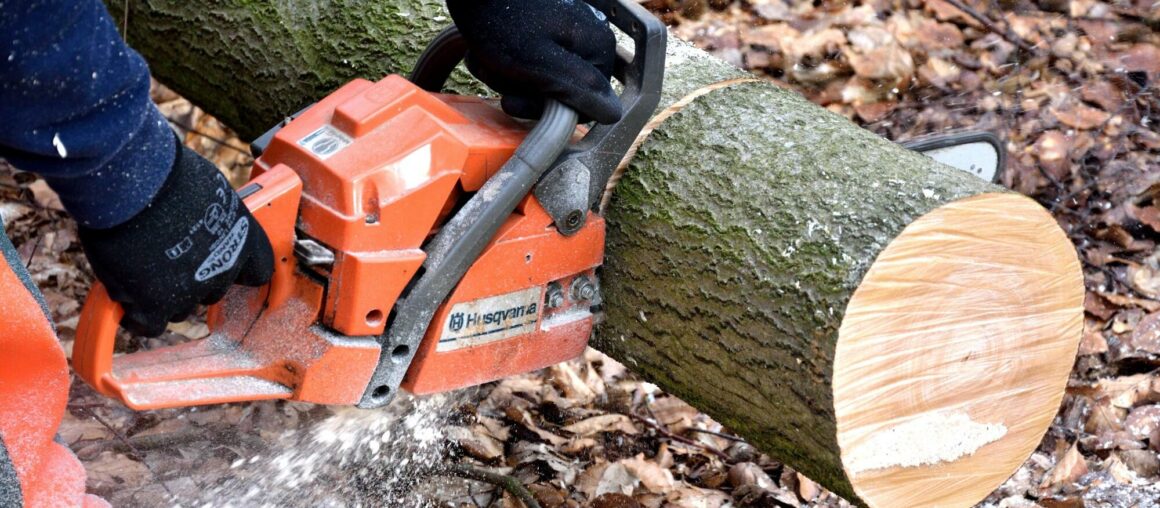
Tree removal cost can vary a lot from one property to the next. I know that is not the answer most people want when they are trying to plan a budget, but it is the honest answer. A small tree in an open yard is a very different job than a tall fir leaning over a roof, fence, driveway, or power line.

In the Puget Sound, tree removal often comes with extra challenges. We deal with tight yards, steep slopes, wet ground, large evergreens, storm-damaged trees, and homes built close to mature trees. Those details matter. They change the crew size, equipment, safety planning, cleanup time, and sometimes the need for crane tree removal.

At P’n’D Logging and Tree Service, we provide free written estimates because a tree removal price should be based on the actual job site, not a guess from an online calculator. Here are the main things that affect tree removal cost and what property owners should understand before scheduling the work.

Why Tree Removal Costs Vary So Much

Tree removal is not priced by height alone. Height matters, but it is only one part of the job. The real cost depends on risk, access, labor, equipment, and what needs to happen after the tree is down.

For example, a tree in the middle of an open field may be straightforward. A trained crew can plan the drop zone, cut the tree safely, process the wood, and clean up the debris. But a tree next to a house, garage, deck, fence, retaining wall, or landscaped yard takes more time and care. The crew may need to climb the tree, rig branches down in sections, use a bucket truck, or bring in a crane to lift pieces safely away from the property.

The Puget Sound also has weather and soil conditions that can affect the job. Wet ground, soft lawns, tight driveways, and sloped lots can all change the setup. Good tree removal is not just about cutting. It is about controlling every part of the process so people, homes, and landscaping stay protected.

The Biggest Factors That Affect Tree Removal Cost

Most tree removal estimates come down to a few major cost drivers. Some are easy to see, like the size of the tree. Others are harder to judge without experience, like internal decay, crane access, or how much rigging is needed.

The most common factors that affect tree removal cost include:

  • Tree height, trunk size, and branch spread
  • Tree condition, decay, cracks, or storm damage
  • Distance from homes, garages, fences, and utilities
  • Access for trucks, cranes, chippers, and crew members
  • Cleanup, hauling, wood removal, and stump grinding

Tree Size and Condition

Larger trees usually cost more because they take more time, more cuts, more hauling, and more planning. A tall evergreen with heavy limbs is not the same as a small ornamental tree. The more material that has to come down, the more labor and equipment the job may require.

Condition also matters. A dead, cracked, leaning, or decayed tree can be more dangerous than a healthy one. Weak limbs can break unexpectedly. Rotten trunks may not hold climbing gear the same way a healthy tree would. The Occupational Safety and Health Administration notes that tree care work can involve serious hazards, including falls, struck-by incidents, and contact with power lines. That is why professional planning matters, especially when a tree is unstable or near a structure.

Learn more from OSHA about tree care hazards.

Access, Slope, and Nearby Structures

Access is one of the biggest reasons two similar-looking trees can have very different prices. If our trucks and equipment can get close to the work area, the job may be faster. If the tree is behind a house, down a steep hill, inside a tight backyard, or surrounded by landscaping, the job takes more planning.

Nearby structures also change the process. A tree close to a roof, shed, deck, fence, driveway, septic area, or neighbor’s property may need to be removed piece by piece. That protects the property, but it also adds time and skill to the job.

Equipment, Crane Work, and Crew Size

Some trees can be climbed and cut in sections. Others are better handled with a crane. Crane tree removal can be especially useful when a tree is large, close to a house, hard to access, or surrounded by landscaping that needs to be protected.

Using a crane is not about making the job look impressive. It is about control. The crane can lift sections of the tree and move them to a safer work zone. This can reduce impact on lawns, flowerbeds, fences, and nearby structures. It can also make some complex removals more efficient.

Crew size also affects cost. A larger job may need climbers, crane operators, ground crew, chipper operators, and hauling support. That is part of doing the work safely and keeping the project moving.

Cleanup, Hauling, and Stump Grinding

Tree removal does not always end when the trunk is down. Brush may need to be chipped. Logs may need to be hauled. The site may need to be raked and cleared. If the customer wants the stump removed or ground, that is usually a separate part of the project.

Stump grinding can make a yard easier to use again. It can also help remove a tripping hazard and clear space for landscaping, grass, or future work. If you want stump grinding included, ask about it during the estimate so the full scope is clear from the start.

Why a Written Estimate Matters

Online tree removal cost calculators can give a rough idea, but they cannot see your property. They do not know if the tree is leaning over your roof. They do not know if the driveway is too narrow for equipment. They do not know if the tree is dead, cracked, tangled with another tree, or sitting on a slope.

A written estimate matters because it gives you a clearer picture of the actual work. It should account for the tree, the site, the equipment, the cleanup, and any added services like stump grinding or hauling.

It also helps prevent confusion. Cheap verbal quotes can miss important details. That is where property owners get surprised later. A serious tree removal company should be willing to explain what is included, what is not included, and why the job is priced the way it is.

At P’n’D Logging and Tree Service, we provide free written estimates for residential, commercial, and municipal tree work. That gives you a real number based on the real job, not a vague guess.

How to Plan for a Safer, More Efficient Tree Removal

You do not need to solve the job before calling us. That is our role. But a few simple steps can make the estimate process easier and help us understand the situation faster.

Before requesting a tree removal estimate, it helps to gather basic details. Take photos from different angles if you can do so safely. Note whether the tree is leaning, cracked, dead, storm-damaged, or touching anything. Look at what is nearby, such as buildings, fences, driveways, utility lines, or landscaping. If the tree has already fallen, let us know what it landed on and whether it is blocking access.

Never try to inspect a dangerous tree up close if it looks unstable. Do not climb it. Do not cut branches from a ladder. Do not work near downed power lines. The Washington State Department of Labor & Industries warns that tree work has serious safety risks, especially around heights, equipment, and electrical hazards.

If the tree is on a public street, near a right-of-way, or part of a regulated property, local rules may apply. The International Society of Arboriculture also recommends using qualified tree care professionals for tree risk and removal decisions.

Visit TreesAreGood.org from the International Society of Arboriculture.

The best way to understand tree removal cost is to have the tree and property reviewed by an experienced crew. That is especially true in the Puget Sound, where large trees, wet weather, tight lots, and nearby structures can quickly change the job.

If you need a tree removed, want to compare options, or are not sure whether a crane is needed, contact P’n’D Logging and Tree Service. We will look at the tree, review the access, explain the work, and provide a free written estimate.

Sources Used:

Tree Fell on Your House? Here’s What to Do First

Tree Fell on Your House? Here’s What to Do First

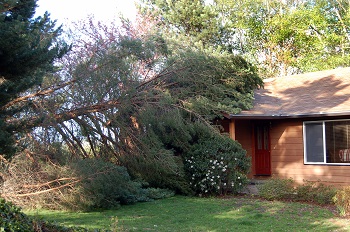
When a tree falls on your house, the first few minutes matter. It is easy to panic, especially if the tree came down during a windstorm, heavy rain, snow, or ice. But this is not the time to climb on the roof, pull branches away, or start cutting limbs yourself. A tree resting on a house can shift without warning. Branches may be under pressure. Power lines may be hidden in the debris. The roof, attic, walls, or deck may be less stable than they look.

We handle emergency tree removal for homeowners, commercial properties, and municipalities throughout the Greater Puget Sound area. In the Pacific Northwest, storms can turn a weak, leaning, or overloaded tree into a serious hazard fast. If a tree has hit your home, garage, driveway, or another structure, here is what to do first.

Make Sure Everyone Is Safe Before Anything Else

Your first job is not to inspect the tree. Your first job is to get people and pets away from danger. If the tree has damaged the roof, broken windows, hit a wall, or entered the home, move everyone to a safe area. If you are not sure whether a room is safe, stay out of it.

Watch for warning signs that mean you need emergency help right away. These include the smell of natural gas, sparking wires, downed power lines, water leaking near electrical fixtures, cracked ceilings, sagging roof sections, or doors and windows that suddenly will not open or close correctly. The Federal Emergency Management Agency recommends staying away from damaged buildings until authorities say they are safe, especially after severe weather or structural damage.

If there are downed electrical lines, do not go near them. Do not touch the tree, branches, fences, vehicles, or standing water near the line. Stay back and call 911 or the utility company. If you smell gas, leave the home immediately and call 911 from a safe location.

Call the Right Emergency Contacts

Once everyone is safe, make the right calls in the right order. If anyone is hurt, if there is fire, if you smell gas, or if power lines are involved, call 911 first. Emergency crews can help secure the area and deal with life-safety risks.

If power lines are down or tangled in the tree, call your utility company. Tree crews should not work around live electrical hazards until the utility has handled the line. This step is not optional. A tree touching a power line can carry electricity, even if it does not look dangerous.

After that, contact your insurance company. Tell them a tree has fallen on your house and ask what documentation they need before cleanup begins. Many insurers want photos, notes, and a basic record of the damage. The Insurance Information Institute explains that homeowners insurance may cover tree damage in many situations, but coverage depends on the cause, policy terms, and what property was damaged.

Then call an emergency tree removal company. P’n’D Logging and Tree Service provides 24/7 emergency tree removal response for storm and wind damage. We also work with insurance companies on claims, which can make the process easier when you are already dealing with property damage.

Document the Damage Without Putting Yourself at Risk

Good documentation can help your insurance claim, but no photo is worth getting hurt. Take pictures and videos only from a safe distance. Do not climb onto the roof. Do not walk under hanging limbs. Do not enter damaged rooms to get a better angle. If the tree is resting on the house, garage, deck, fence, or vehicle, assume it can move.

Helpful documentation may include:

  • Wide photos showing the whole tree and structure
  • Close photos of visible damage from a safe spot
  • The date and time the damage happened
  • Photos of downed limbs, blocked driveways, or debris
  • Receipts for emergency repairs or temporary lodging

Do not start cutting the tree apart on your own. This is where homeowners make costly mistakes. A fallen tree may look still, but it can be loaded with tension. One wrong cut can make the trunk roll, limbs snap back, or weight shift onto the roof. That can cause more damage and put you in the path of the tree.

If water is coming in, protect the inside of the home only if it is safe to do so. Move valuables away from leaks, place buckets under drips, and avoid electrical areas. If the structure is unsafe, stay out and wait for help.

How Professional Emergency Tree Removal Helps Protect Your Home

Emergency tree removal is not just about getting the tree off the property. It is about removing it in a way that reduces further damage. When a tree is on a house, the wrong method can make the situation worse. Dropping heavy sections, pulling the trunk the wrong direction, or cutting without proper rigging can tear roofing, crush gutters, damage siding, or shift weight into the structure.

That is why equipment matters. We use cranes, crews, and proper gear to safely lift and move trees when conditions call for it. Crane tree removal is especially useful when a large tree is resting on a roof, trapped between structures, leaning over a home, or sitting in a tight landscaped area. Instead of dropping large pieces into the yard or onto the structure, the crane can lift sections away and move them to a safer work zone.

This low-impact approach is one of the reasons homeowners call us after storm damage. It can help limit damage to lawns, landscaping, fences, driveways, and nearby structures. It can also make the job faster and safer when compared with basic cutting methods.

After the tree is removed, storm debris cleanup may still be needed. Branches, logs, leaves, and broken materials can block driveways, damage landscaping, and make the property unsafe to walk through. Clearing that debris helps restore access and gives roofers, contractors, or insurance adjusters a safer space to inspect the damage.

The Centers for Disease Control and Prevention warns that cleanup after storms can bring serious hazards, including unstable structures, electrical risks, and injuries from tools or debris. That is why homeowners should be careful about what they handle themselves and what they leave to trained crews.

If a tree falls on your house, do not treat it like a normal yard cleanup job. Get people safe, call emergency services if needed, contact your utility and insurance company, then bring in a professional emergency tree removal crew. The faster the tree is handled correctly, the better your chances of preventing more damage.

P’n’D Logging and Tree Service provides 24/7 emergency tree removal for storm-damaged properties throughout the Greater Puget Sound area. If a tree has fallen on your home, garage, driveway, or property, contact us for emergency help or request a free written estimate.

Source URLs used:
https://www.ready.gov/returning-home
https://www.iii.https://www.lni.wa.gov/safety-health/safety-topics/industry-topics/tree-careorg/

https://www.cdc.gov/disasters/cleanup/facts.html

How to Get Your Puget Sound Property Ready for Summer

How to Get Your Puget Sound Property Ready for Summer

By late April, the Puget Sound starts dropping hints. The rain eases up a little, the days stretch out, and suddenly everybody wants to be outside again. Backyard dinners, customer traffic, outdoor work areas, summer projects… it all starts soon. At P’n’D Logging and Tree Service, we know this is the moment when property owners look around and realize winter and early spring left behind more than they thought.

Getting a property ready for summer does not have to mean a giant overhaul. Usually, it is a matter of cleaning up what is in the way, taking care of safety issues, and making the space more usable before the busy season arrives.

Start With What Winter Left Behind

Even if your property made it through winter without major damage, chances are it still picked up some clutter along the way.

This is a good time to look for:

  • Fallen branches
  • Brush creeping into usable space
  • Piles of yard debris
  • Overgrown edges near fences or buildings
  • Stumps left behind from old removals
  • Limbs hanging low over driveways, walkways, or parking areas

A quick property walk in late April can tell you a lot. The big question is simple: if people are going to use this space more in the next few months, is it ready?

Clean Up Overgrowth Before It Takes Off

Spring growth in the Puget Sound does not exactly believe in moderation. Give blackberries, brush, and volunteer saplings a little sunshine and they get to work fast.

That is why late April is such a useful time to clear things back. You can still get ahead of summer growth before it turns a manageable cleanup into a full-blown jungle expedition.

For homes, that may mean opening up the yard, reclaiming side areas, or making outdoor spaces more enjoyable. For businesses, it often means improving visibility, access, and the overall look of the property before summer activity picks up.

Think About Summer Safety, Not Just Summer Looks

A property can look green and full and still be a problem.

Brush and debris can hide trip hazards, low limbs can crowd access, and leftover stumps can become a daily annoyance once people are walking, mowing, parking, or working outdoors more often. The CDC also recommends emptying and scrubbing containers with standing water once a week because mosquitoes lay eggs in even small amounts of water. That makes spring cleanup a good time to remove the random buckets, trays, and overlooked low spots that collect water around a property.

A few practical summer-prep items to think about:

  • Clear brush away from paths and work areas
  • Remove debris piles that attract pests
  • Raise or trim limbs over gathering and access areas
  • Get rid of old stumps that interfere with mowing or foot traffic
  • Tidy up places where water tends to sit

Stump Grinding Is One of Those “Why Didn’t We Do This Sooner?” Jobs

Stumps tend to hang around way longer than anyone wants them to. At first, they seem harmless. Then summer shows up and suddenly they are right in the middle of mowing, landscaping, parking, or backyard plans.

Stump grinding is one of the easiest ways to make a property feel more finished and functional. It helps open up space, removes a tripping hazard, and makes it easier to use the area the way you actually want to use it.

For residential properties, that might mean more usable lawn or room for a project. For commercial properties, it often means cleaner edges, safer grounds, and fewer obstacles for maintenance crews.

Get Ahead of Dry-Season Risk

Even in the Puget Sound, summer eventually dries things out. That is when brush, dead vegetation, and neglected edges become more than an eyesore. They become fuel.

Ready.gov advises property owners to keep the area around structures clear of leaves, dead vegetation, and other flammable materials because defensible space helps reduce fire risk. This is more often associated with hotter parts of the West, but the principle still matters here. By the time summer arrives, it is much easier to appreciate a property that was cleared and cleaned before things dried out.

Summer Is Better When the Property Is Ready

Nobody wants to spend the first sunny weekend of the season staring at a brush pile, dodging a stump, or wondering if that low limb is going to scrape the delivery truck. A little work in late April can make the whole summer feel easier.

That might mean clearing overgrowth, trimming trees, grinding stumps, or simply opening up the property so it functions the way it should. If your place could use a reset before summer gets going, P’n’D Logging and Tree Service can help you get it cleaned up, cleared out, and ready for the months ahead.

Residential Excavation for Spring Projects in Puget Sound

Residential Excavation for Spring Projects in Puget Sound

By April, the Puget Sound starts giving off that unmistakable “project season” energy. The days are longer, the mud starts easing up, and suddenly everyone is looking at their property thinking, “Now might be the time.” At P’n’D Logging and Tree Service, we know spring is when homeowners start making plans for driveways, shops, additions, drainage fixes, and all the other improvements that need a solid start under the surface.

That is where residential excavation and site development come in. Before the visible part of a project begins, the ground itself usually needs attention.

Spring Is When Ideas Start Becoming Real

Winter is great for making plans. Spring is when those plans finally meet the dirt.

Residential excavation can help prepare a property for:

  • New driveways or parking areas
  • Shop pads or accessory buildings
  • Yard grading and drainage correction
  • Retaining wall prep
  • Utility trenching
  • Site preparation for future landscaping or construction

If the goal is to improve how a property looks, functions, or drains, excavation is often one of the first big steps.

Why April Makes Sense

Early spring is a sweet spot. The ground is becoming more workable, but summer demand has not fully kicked into high gear. It is a practical time to start preparing a site before dry-weather projects pile up.

It is also a good time to catch drainage and grading issues that winter made obvious. If water pooled where it should not, or if runoff started carving channels through the yard, spring is when those problems deserve attention.

According to the EPA’s guidance on green infrastructure, grading, soil condition, and how water moves across a site all play a major role in runoff control and long-term drainage performance. In other words, what happens at ground level matters more than many homeowners realize.

Excavation Is Not Just Digging

A lot of people hear “excavation” and picture one machine digging a hole. In reality, site prep is usually more thoughtful than that.

Depending on the project, excavation can involve:

  • Removing unsuitable soil
  • Regrading uneven areas
  • Building up low spots
  • Shaping the site for water movement
  • Creating stable areas for future construction
  • Improving access across the property

The goal is to set the project up right from the beginning. When the base is wrong, everything built on top of it becomes harder to manage later.

Site Development Makes the Rest of the Project Easier

Site development is the part that gets a property ready for what comes next. It is where a rough idea becomes a buildable, usable space.

For homeowners, that might mean:

  • Turning a soft, uneven area into a future building pad
  • Creating cleaner access for equipment
  • Making space for a detached garage or workshop
  • Preparing the ground for hardscaping or large landscape upgrades
  • Correcting slope or drainage problems before they get worse

The Washington State Department of Ecology notes that clearing, grading, and excavation can contribute to erosion if a site is not properly managed. That is one reason proper planning matters. Good site work is not just about moving dirt. It is about moving it in a way that supports the property long-term.

Drainage Is Often the Hidden Reason People Call

Sometimes homeowners think they need excavation for a structure, but the real problem is water.

After a wet Puget Sound winter, a property might show signs like:

  • Standing water that lingers
  • Soggy lawn areas that never dry out
  • Washed-out edges along driveways or paths
  • Muddy low spots near buildings
  • Water flowing toward the house instead of away from it

Those issues can often point back to grading. Fixing them early can improve the whole property before summer use ramps up.

It Helps to Start Before Summer Is in Full Swing

One of the nice things about doing this work in April is that it puts homeowners ahead of the seasonal rush. Instead of trying to squeeze a project into peak summer demand, spring gives a little breathing room.

It also means the property can be ready for:

  • Summer construction
  • Outdoor entertaining spaces
  • Better access and parking
  • More usable yard space
  • Cleaner, drier conditions overall

And honestly, it is easier to picture the finished result when the weather finally starts cooperating.

Spring Is a Great Time to Get the Ground Ready

Excavation and site development may not be the flashy part of a property improvement project, but they are often the part that makes everything else possible. If the ground is uneven, too wet, poorly graded, or simply not ready, spring is the right time to deal with it. Whether the plan is a practical drainage fix or a bigger property upgrade, P’n’D Logging and Tree Service can help homeowners in the Puget Sound get their site ready for what spring and summer have in store.

Commercial Land Clearing in the Puget Sound

Commercial Land Clearing in the Puget Sound

Spring is one of the busiest seasons for property planning in the Puget Sound. The ground starts drying out, visibility improves, and commercial property owners begin thinking about access, appearance, and how to make better use of their land. At P’n’D Logging and Tree Service, we know this is the time of year when overgrown lots, brush-covered edges, and winter debris start standing out in a big way.

Commercial land clearing is not just about making a property look better. It is often the first step in making a site safer, easier to access, and more useful for whatever comes next.

Why Spring Is a Smart Time to Clear Commercial Land

After a wet winter, many commercial properties are dealing with a mix of saturated ground, fallen branches, thick brush, and vegetation that is just about to take off for the season. If you wait too long, spring growth can make a property harder and more expensive to manage.

Early spring gives us a better window for:

  • Seeing what winter left behind
  • Removing brush before it gets thicker
  • Clearing access for vehicles, crews, or equipment
  • Preparing lots for future projects
  • Improving visibility and site safety

It is much easier to reclaim a site before everything greens up and fills back in.

Overgrowth Creates More Than an Eyesore

When a commercial property starts getting overgrown, the problems go beyond appearance. Brush, blackberries, saplings, and debris can block access, hide hazards, and make a property harder to maintain.

We often see commercial sites where overgrowth leads to:

  • Reduced visibility near entrances or drive lanes
  • Hidden stumps, holes, or dumped debris
  • Encroachment along fences, signs, or structures
  • Difficult access for service vehicles
  • Drainage problems caused by clogged or blocked natural flow paths

For businesses, that can affect both safety and presentation. A site that looks neglected can send the wrong message before anyone even reaches the front door.

Drainage Matters in the Puget Sound

Commercial land clearing is also tied closely to drainage. In our region, winter and spring rains can expose how water really moves across a property. Dense brush, organic debris, and uneven buildup can hold water where it should not be.

According to the EPA’s guidance on the benefits of green infrastructure, vegetation and soil management play an important role in capturing, absorbing, and reducing stormwater runoff. That matters on commercial land where pooling water can damage surfaces, affect access, and create ongoing maintenance issues.

Clearing overgrowth gives property owners a better look at grading, runoff patterns, and areas that may need additional work before spring and summer use increase.

Clearing Land Can Improve Safety

Commercial properties have a different kind of responsibility than residential ones. Employees, customers, vendors, delivery drivers, and contractors all move through the site. Overgrown land can create safety issues that are easy to overlook until someone has to walk or drive through them.

Common safety concerns include:

  • Brush blocking sightlines
  • Trees or limbs crowding parking or loading areas
  • Slippery debris buildup after rain
  • Uneven ground hidden by overgrowth
  • Fire fuel buildup in dry months

The U.S. Forest Service explains that reducing excess vegetation and fuels helps protect structures, access routes, and surrounding land. While wildfire is not the first thing most people think about in the Puget Sound, dry summer periods and dense brush can still create risk around businesses and storage areas.

It Helps Prepare a Site for What Comes Next

Sometimes commercial land clearing is about maintenance. Other times, it is the first phase of a bigger plan.

A cleared property is easier to evaluate and easier to use for:

  • New fencing
  • Parking expansion
  • Outdoor storage
  • Utility access
  • Landscaping improvements
  • Site development or excavation work

Even if construction is not happening right away, clearing the site now makes future planning much easier. It also helps property owners make better decisions once they can actually see what they are working with.

The Right Equipment Makes a Difference

Commercial land clearing is not a hand-tool kind of job. Larger sites, dense vegetation, and uneven terrain usually require the right equipment to get the job done efficiently and safely.

Depending on the property, that can mean:

  • Excavators for moving soil and debris
  • Equipment for brush and blackberry removal
  • Tree removal for problem areas
  • Hauling and cleanup to leave the site workable

The goal is not just to cut things back. It is to leave the property cleaner, more open, and ready for use.

Spring Is a Good Time to Get Ahead

Once spring growth really kicks in, overgrown commercial areas can get out of hand fast. Taking care of clearing work early in the season helps property owners avoid bigger problems later and creates a better foundation for the rest of the year.

Whether the goal is safety, visibility, access, or preparing for future improvements, P’n’D Logging and Tree Service can help commercial property owners across the Puget Sound clear the way and make better use of their land.